
Introduction
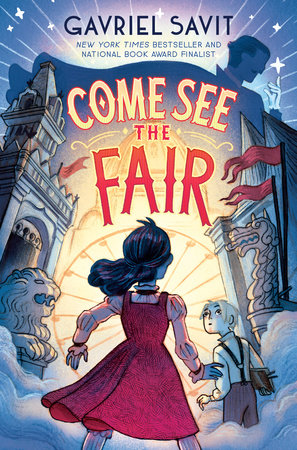
Come See the Fair is Gavriel Savit’s third novel and his first middle grade work. Set in the Chicago World’s Fair of 1893, we follow Eva Root as she discovers that the line between possible and impossible isn’t as finite as she believes. This was a selection from NetGalley, who provided me an ARC in exchange for an honest review.
The Good Stuff
As a pretty stereotypically nerdy kid, I really enjoyed (and currently enjoy!) historical fiction for kids. There’s something about going back in time via a point-of-view story that satisfies a deeply nerdy itch that lots of people have. Come See the Fair is a decent example of this in a few different respects. The titular Chicago World’s Fair of 1893 is not only the primary backdrop but also serves as a part of the plot throughout. Even before we actually get to the fair, we meet Eva Root as she prepares to perform a séance. Eva’s internal monologue acknowledges that the process is entirely made up and so is taken completely by surprise when something not-so-made-up happens to her during the performance. As she reflects on her life up until the point we meet her, we see some markers of the late 19th century setting as well: Eva is an orphan and is only nominally cared for; she is immediately able to run off with no questioning when her situation with her caretaker is no longer tenable. She meets Henry Poole, a well-to-do artist her age, on the train and is taken into the main events of the story.
The story starts off very strong! As I sort of described above, we’re immediately immersed in Eva’s story and invested in how she gets on. Her relationship with Henry develops quickly but not too much so. The same is true when Eva meets Mr. Magister, but both new connections develop in a way that dovetails nicely with the other. We as observers are able to see that Eva’s friendship with Henry is much healthier than hers with Mr. Magister even while understanding why she might be drawn to the latter the way she is.
Similarly, descriptions of different scenes are lush but not over-done; the same is true of the characters. We have nearly all five senses engaged when following Eva’s story. In a way this brings a real sense of immersion from Eva’s point of view, as other characters’ interactions with her are sometimes difficult to parse. We’re seeing things from a 12-year-old girl’s eyes who is still learning about how the world works. Particularly from an anachronistic point of view, this is tricky! It seems like this is a part of Savit’s storytelling method as Eva navigates betrayal, but it was difficult to parse as a reader. That said, I definitely know that this book will absolutely captivate my patrons that love historical mystery and magic.
The Not-So-Good Stuff
Although I overall enjoyed this book, I do have some criticism for how the last third of the story was handled. I wanted to sit with the story for a bit before writing this because I wasn’t sure of how I wanted to communicate these issues as they seemed to pop up out of nowhere! The first half/two-thirds of the book were in a consistent style that was easy to follow and drew me in to find out what happened next. The last third, however, had a stylistic shift that made the conclusion difficult to follow and understand. (Can you tell I’m doing my best to avoid spoilers here?) Although we see some nice connections to the beginning of the story, the exponential increase of ambiguous elements at the end left me feeling pretty frustrated. I’m not asking for a happy, tidy ending, but one that clearly established what the characters were up to would have been nice.
As I said above, this book will definitely catch some of my younger patrons in the library, but it’s not one I’m sure I can recommend regularly. My main hangup is that kids might be frustrated by the amorphous conclusion – I know I certainly was! I’m glad to see that I’m not the only person who’s felt this way about Savit’s work; reviews for his other work mention similar difficulties understanding the endings. This might just be me, but it’s important to mention here especially if you’re planning on recommending this one to kids.
In Summary
Overall, Come See the Fair is a solid entry in the canon of kid fic in and around historical settings and events. The ending is one you and your kiddos might find frustrating, however, so go into it with eyes open on that front. All of that said, I’m coming down on the side of listing this book as recommended.
There aren’t any links to this work online just yet – keep an eye on Gavriel Savit’s website for more information. Gichi miigwetch for reading!

 Mzinigan Mshiiken