
Introduction
Hi all! Thanks for your patience while I do conference stuff – I had the chance to attend LibLearnX in New Orleans this past week, and it was lovely. I’m a part of this year’s Emerging Leaders cohort and I’m thrilled to get started, although I also want to talk about some wonderful books I’ve read recently, too. One of these is this one all about bodily autonomy for children! Let’s dive in below.
The Good Stuff
Shortly before flying out, I caught this book on its way to fulfill a hold at the desk. I immediately wanted to talk about it because it’s something I hadn’t seen before and was really excited to learn about! The format we have on our shelves currently is a boardbook, which means it’s designed for little ones who are still getting the hang of regular books. Sturdy pages mean little hands can turn them themselves, although the subject matter still relies on an adult to contextualize and talk about.
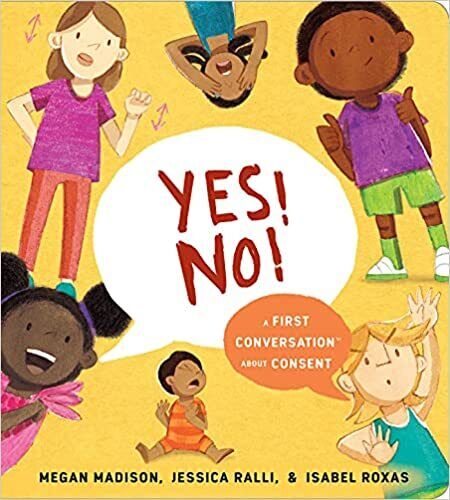
While introducing what consent means and the basics of practicing bodily autonomy, the text encourages engagement with follow-up questions for the adults reading the book with little ones. Additionally there are many different body types and communication methods represented and discussed. The cover is a great example of this: not only does it include non-verbal communications like nodding or covering one’s eyes, but it specifically includes the sign for YES in American Sign Language! A huge variety of skin tones and family configurations are shown as well to drive home the point that the lessons inside are for any kiddo and their adults. No assumptions are made about the relationships between adults and children in this book, so that’s another plus in terms of providing advice that can be applied anywhere.
More on the nonverbal front: ‘no’ is illustrated beautifully throughout the book. There are specific examples of hugging or tickling that include verbal ‘no’, non-verbal ‘no’, and other ways of saying no indirectly. An entire 2-page spread is dedicated to ways that people say ‘no’ indirectly with the major point being that if it’s not a direct ‘yes’, then it’s a ‘no’! Importantly it also demonstrated these same concepts between kids: a specific example was a kid telling another that they did not want to be tackled in their game anymore. Furthermore, the book discusses that even if you heard ‘yes’ before, it doesn’t mean ‘yes’ forever and you are allowed to change your mind. The final thing I wanted to point out about this book too is that it talks about how you might feel if someone tells you ‘no’ – namely that it’s okay to be sad or mad, but that you have to respect the other person’s decisions about their body no matter what.
In Summary
As always, any book that encourages kids to learn how to be kind to one another is a winner to me. This book in particular is exciting because it helps families introduce concepts of bodily autonomy in ways that are safe, inclusive, and respectful to many children’s experiences. This book is highly recommended and is a new addition to my recommendations shortlist for families looking for body books.
Yes! No!: A First Conversation About Consent is written by Megan Madison and Jessica Ralli with illustrations by Isabel Roxas. It’s published by Rise x Penguin Workshop, and imprint of Penguin Random House. You can find the book on the publisher’s website, linked here. As always, gichi miigwech for reading!

 Mzinigan Mshiiken