Introduction
Hi all, and welcome back. This week’s book is a little bit of a tough read because it focuses on a difficult part of Indigenous history in North America: the residential school system. A lot of work has been done recently around the first step of acknowledging what happened at this core piece of Indigenous genocide, and this book is an aspect of that. This is one specific story among tens of thousands, as told to Peggy Janicki by her mother, Mary. This one will be a little rough, but let’s dive in together below.
The Good Stuff
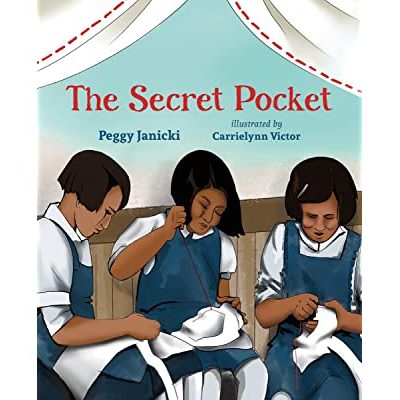
This is one person’s lived experience. It’s important to remember that throughout this book – Janicki writes her mother’s words as they were relayed. The back matter explains that Janicki didn’t hear about her mother’s experiences until very late in her mother’s life (as is extremely common for survivors of residential schools), but when she did hear about it, she passed the story on with her mother’s blessing. This specific story focuses on how Mary and the girls in her class figured out a way to survive the starvation conditions they were in by sewing secret pockets into their clothing in order to smuggle food out of the kitchen.
We don’t have a good sense of time – Mary implies that time passes by talking about how she grew older and would help out during her summers at home. We don’t have an exact measure of how much time Mary and her siblings spent in the school but we do know that it was long enough that they needed to find ways to survive constant starvation. Their brilliance in figuring out how to hide food in their clothing not only allowed their survival but helped them to help the younger children as well. This quote summarizes it well:
We found our ways and filled our pockets with what we needed to carry on. We filled our pockets with so much more than food. We filled them with our future.
ARC page 19
This book is in a picture book format, but similar to I Am Not a Number and Home to Medicine Mountain, that doesn’t mean it shouldn’t be shared as the serious nonfiction piece that it is. The picture book format allows Victor’s illustrations to drive home Janicki’s words and show the contrast between the comfort and routine of home and the stark, soulless environment of the school. Each of these stories is a critical part of understanding residential schools’ role in Indigenous genocide across the North American continent. This Wikipedia article about the residential school system in Canada is a good place to start learning about what happened, although as always I’ll recommend learning more beyond this and sharing these stories with the kiddos in your life.
I wanted to share this book here because I think it highlights some deeply important concepts. It’s not just that it talks about a painful and prescient time in North American history, but also that this book and the others I mentioned are ways that kids can relate to someone their age surviving and overcoming a major challenge. I don’t say this lightheartedly. I think it’s more important than ever to show kids that they are powerful, strong, and smart human beings who can make it through unimaginable things. As someone with a still-living auntie who survived residential schooling, please learn about these stories.
In Summary
This was a heavier choice, but it’s important. Janicki does incredible work sharing her mother’s story, and Victor’s illustrations help to drive home how young Mary was when she had to figure out how to survive. This book is highly recommended.
The Secret Pocket is written by Peggy Janicki (Nak’azdli Whut’en First Nation) and illustrated by Carrielynn Victor (Coast Salish). It’s published by Orca Book Publishers, and you can find links to purchase it here. As always, gichi miigwech for reading!

 Mzinigan Mshiiken