
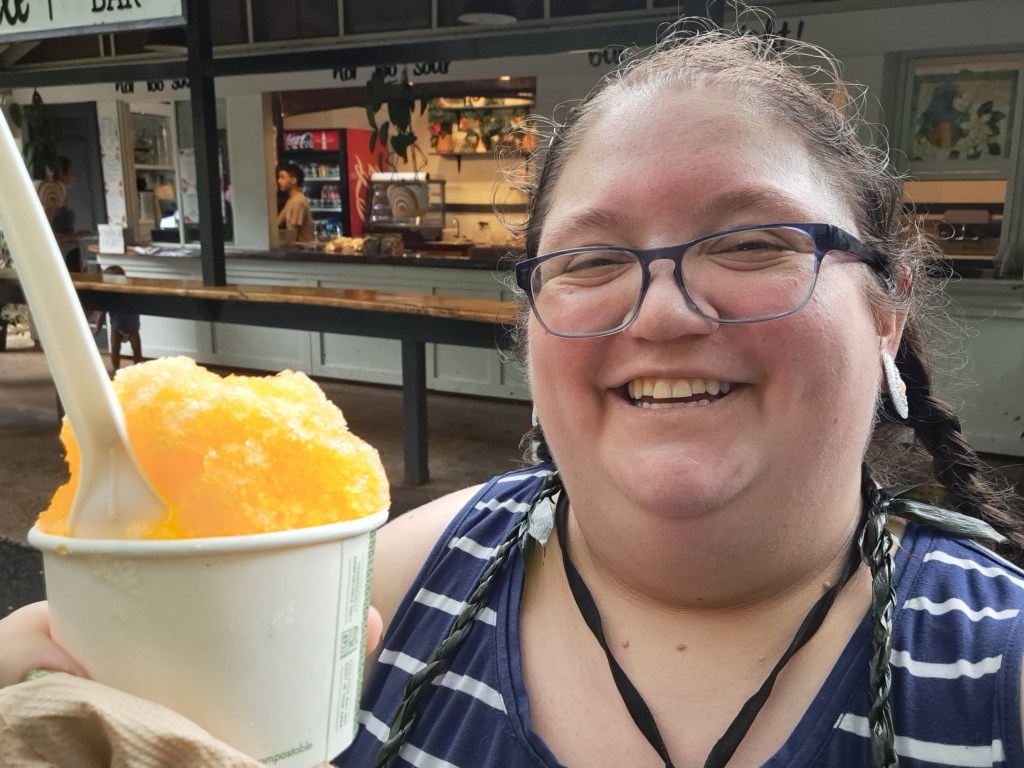
Aanii boozhoo nwiijkiwenhak! It’s been quite a while, but I have a great reason for being gone for so long. This is going to be a super-long post about the 12th International Indigenous Librarians Forum. A lot of my time in October and November was spent getting ready to attend and then actually attending this incredible event. There’s too much to cover in one post, but I wanted to share a little bit of the experience here!

IILF has happened for a number of years, although this was the first time that IILF was held in Hawai’i. I hadn’t heard of IILF before becoming more involved in professional organizations as a librarian, so needless to say I was very excited! I was also excited because there has been an increasing movement to severely limit/reduce tourism in Hawai’i due to its negative impacts on kanaka maoli and the delicate environment of each island. The above article goes through many different reasons for pulling back and being more mindful when visiting Hawai’i. One that I want to really highlight here is the overwhelmingly negative impact of tourism on culture.
That’s where IILF in Hawai’i comes in, though. This entire event was not only an amazing way to focus on the intersection of Indigenous peoples and librarianship, but to do so in Hawai’i gave us a unique opportunity to do this work in a Native Hawai’ian setting. Everything – the food, the places, the events – was intentionally curated to allow participants to experience Hawai’i as it should be experienced. It was beautiful, to be led into receiving and sharing knowledge in a respectful and authentic way by people who care deeply about their culture and their home.
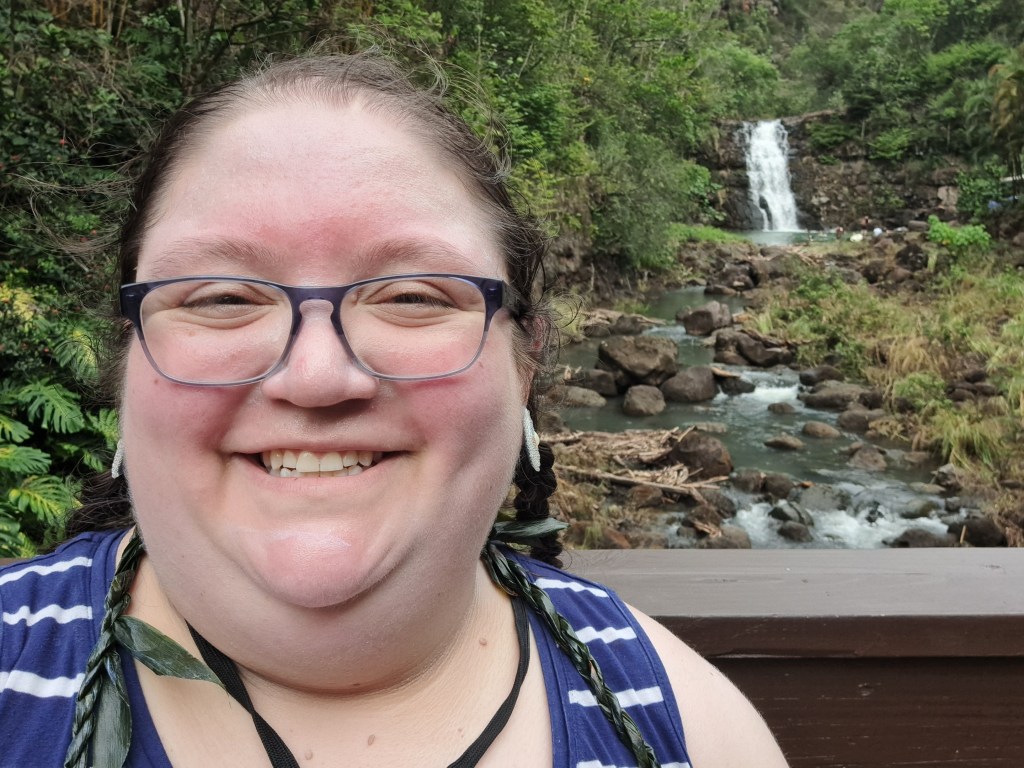
The pictures so far have all been from the Day on the Land, when we spend time immersed in cultural activities with the hosting nation. This IILF, this meant spending the day at Waimea Valley, a nonprofit organization dedicated to preserving and sharing Hawai’ian culture in sustainable ways. It took about an hour and a half for the buses to get us all there from the University of Hawai’i Manoa campus but getting up super-early the day after an 11-hour flight had never been more worth it.
The morning was spent with opening ceremonies. I won’t share the details here as I don’t want to accidentally violate cultural protocols, but we were able to share our cultures with one another while beginning the conference in a good way. Some members of Waimea Valley’s administrative and executive staff played music for us while we ate what has been arguably one of the best meals in my lifetime. After lunch, we were able to explore all the valley had to offer.
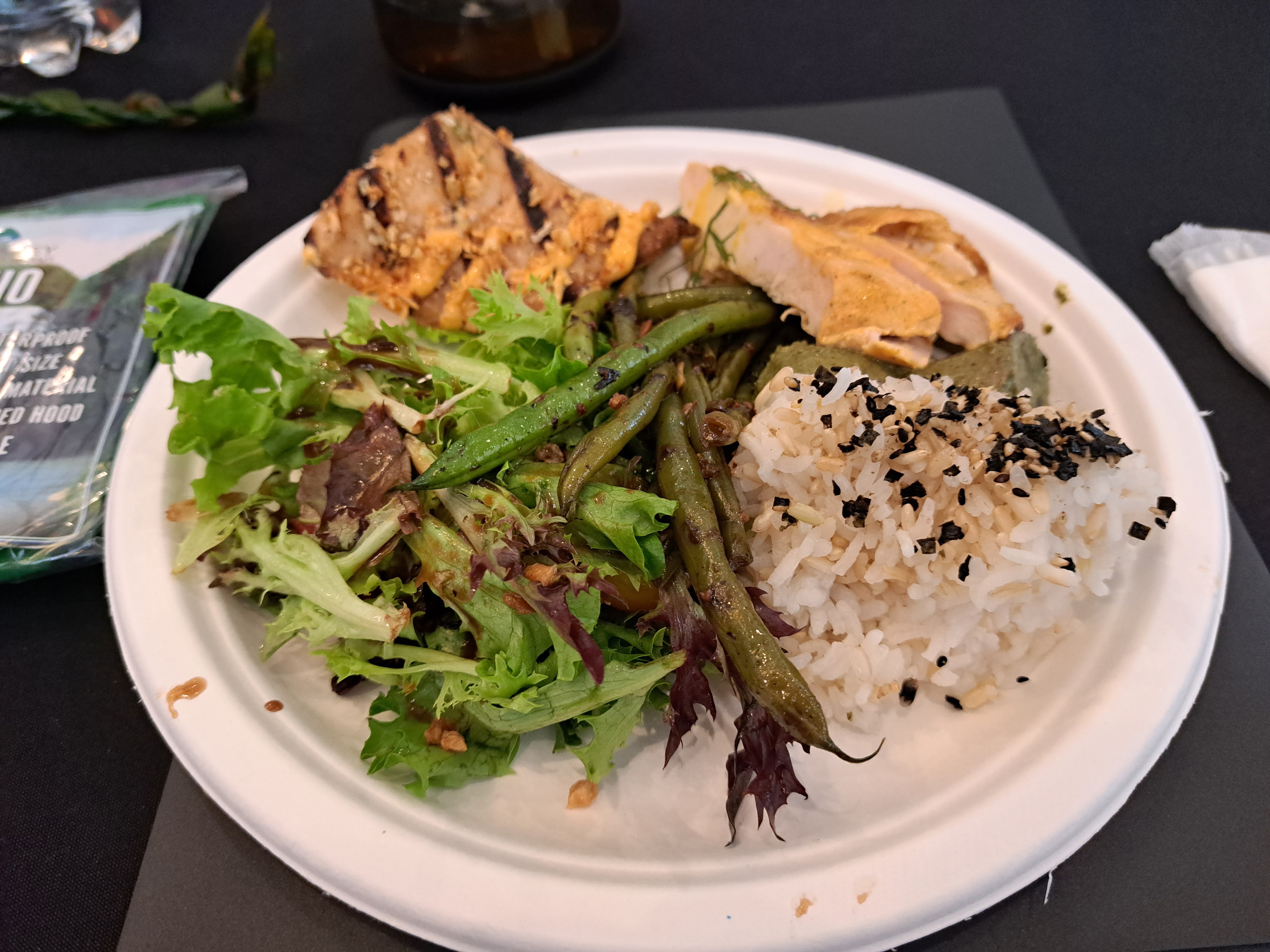
(My stomach still growls when I see this picture!)
One of the above pictures is of my very happy face in front of the waterfall. We found out that the falls actually had not been running due to droughts in the area and only started up again a few days before we arrived! It truly felt as though the land was welcoming us and celebrating our gathering.
The rest of the conference was just as remarkable as this first day. Folks from around the world shared the work they’ve been doing in their organizations to promote Indigenous agency and epistemologies. This work is so hard in many different ways – no matter your type of library! – and to see so much Indigenous excellence in one place was incredible, beautiful, and a little overwhelming at times! I made a ton of wonderful new friends from around the world and I genuinely think that we are moving to a place that includes and celebrates Indigenous knowledge more than ever before.
One very tangible part of this was the Pāʻina Lā Kūʻokoʻa, an Independence Day celebration. This link takes you to the Wikipedia article about the day as a whole. I will definitely encourage you to look further into the history of this holiday and its importance, too! Because Lā Kūʻokoʻa is on November 28th, it was a perfect chance to celebrate it at IILF. The celebration was held at the Kamakakūokalani Center for Hawaiian Studies at University of Hawai’i Mānoa. This was another breathtaking part of the experience at IILF because “Kamakakūokalani, its faculty, classes, and program, represents Hawaiian perspectives and knowledge within the larger academy” (quote pulled from the Center’s website). The Center is an example of what intentional inclusion looks like when it comes to Indigenous perspectives in academia.
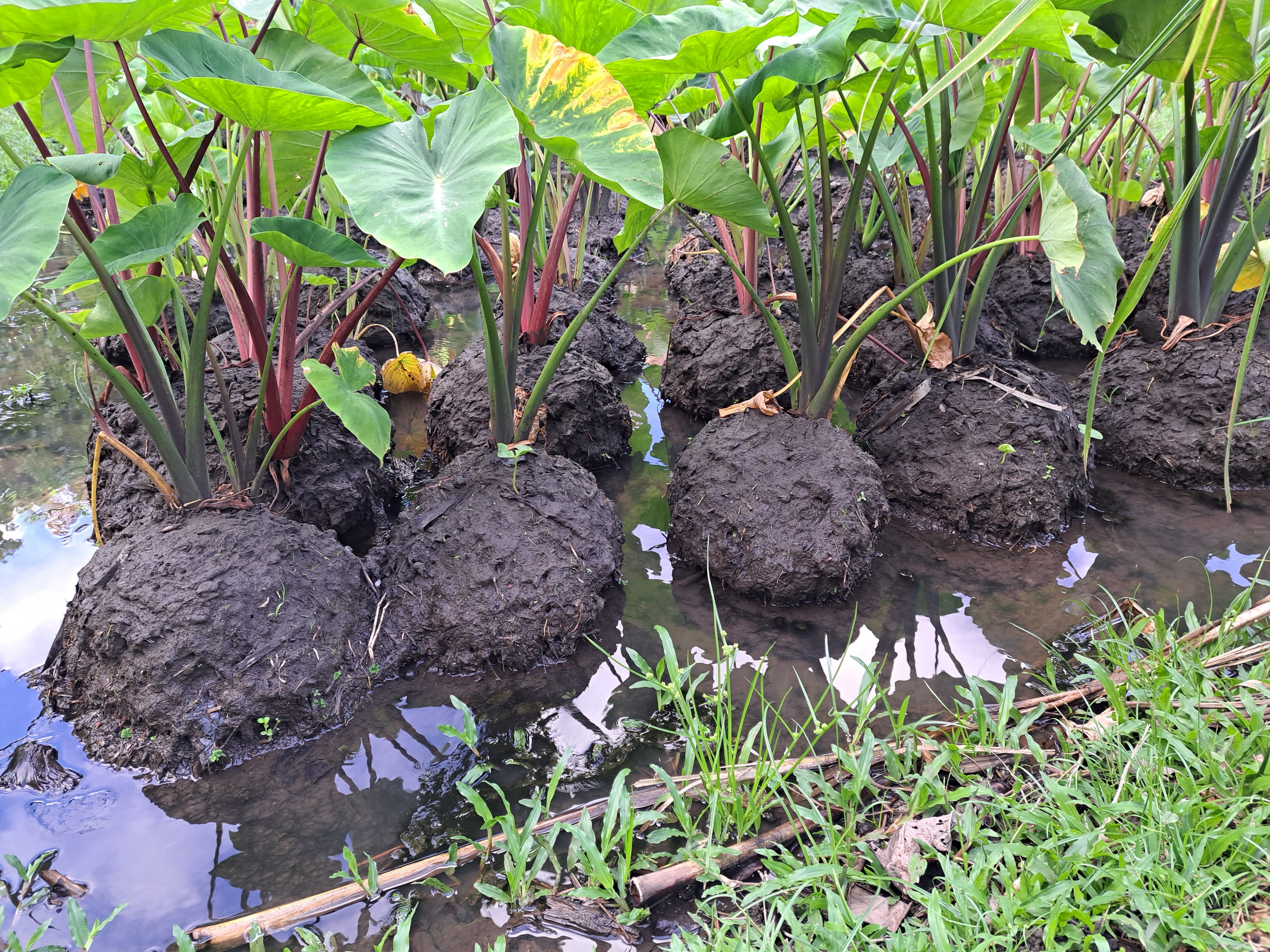
Walking into that space was pure magic. IILF in a major way was not only about librarianship and Indigeneity, but also about dreaming of what the future could be – experiencing Pāʻina Lā Kūʻokoʻa at the Kamakakūokalani Center was indescribably healing and bolstering all at once. While we still have so far to go with regard to how Indigenous people and perspectives are included in traditionally European-focused spaces, that celebration made it seem more possible and much sooner than ever before. Again, I don’t want to inadvertantly violate cultural protocols by discussing specific events, but I did want to share one of the pictures I took of the garden at the Center. The above picture is of one small bit of Kahualoa, the garden! We were able to take tours of the garden and to talk to the plant caretakers. The plants are kalo (taro) and were grown in traditional ways. There were a ton of different varieties, each with their own growth patterns and caretaking methods. It was really incredible to see and drove home the connection we felt to the land.
The poi was also waaaay tastier after visiting Kahualoa! The food at this celebration was out of this world. Saying that I miss the food in Hawai’i is like saying that the sun is hot. Every aspect of IILF was intentional, including the food. The Waiahole Poi Factory catered the celebration – this is the video we were given to educate delegates about the food highlighted at the event. We got the Kanaka Nui, so you have my apologies in advance for how hungry you’ll feel after reading the description.

I can’t say it enough – IILF was magic. I’m so grateful that I had the opportunity to go. I am absolutely planning on going to the next one, and every one I can get to after that, too! I’m feeling so inspired to try new things and to bring my community and DC’s Indigenous communities into my library; this event made me feel like it’s actually possible.
Gichi miigwech, thank you all very much, for reading this post! I’m hoping I did IILF justice, although the feelings from that week are difficult to put entirely into words. It’s my sincere hope that this work continues and that I can contribute to it in some way.
As for book reviews – I’m going to work on building up my back log over the holiday season. You’ll see me regularly posting again in January! Gichi miigwech again, miinwaa wiingezin. Take care this holiday season! Gizaaginim!


 Mzinigan Mshiiken